GUANG JUN · THE MUSICIANS SERIES
Claude Debussy
1862–1918

Musicians series · Printed reproduction
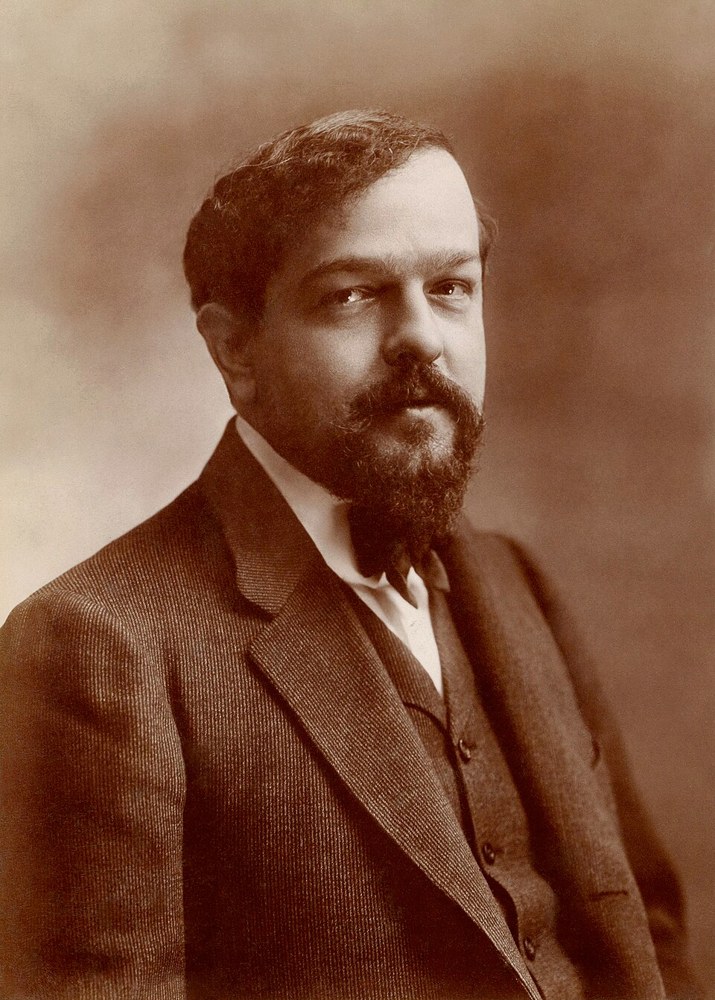
01 · LIFE
A life in music
Claude Debussy studied at the Paris Conservatoire but developed a musical language that questioned many of its conventions. Poetry, painting and the sounds of non-European traditions helped widen his imagination. His piano works, orchestral scores and opera Pelléas et Mélisande offered new possibilities for musical time and colour. Often associated with Impressionism, a term he resisted, he became a central figure in the emergence of modern music.
02 · MUSICAL LANGUAGE
Sound & style
Debussy lets harmony and instrumental colour shape the music as much as melody. Floating rhythms, unresolved chords and unusual scales create ambiguity without abandoning expressive direction. Listen for delicate layers of sound and for silences that seem to extend the musical space.
03 · ESSENTIAL LISTENING
Start listening
- 01Find recordings ↗
Prélude à l’après-midi d’un faune
1894
- 02Find recordings ↗
Pelléas et Mélisande
1902
- 03Find recordings ↗
La mer
1905
Sources & further reading
The artwork is a printed reproduction. The historical portrait is shown for reference.
Explore all portraits →